Cleaning Restores an Intended Route
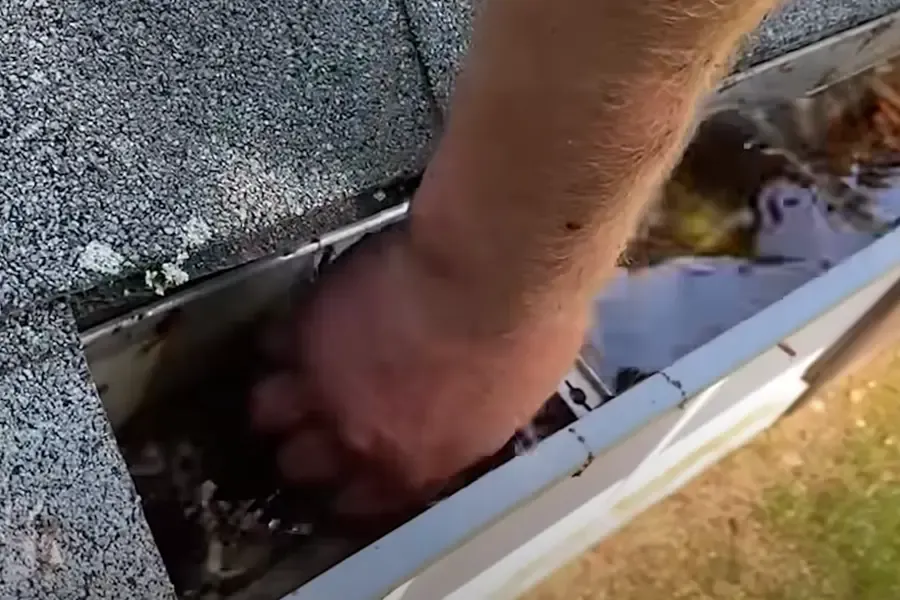
A gutter is a narrow channel between a broad roof and a much smaller outlet. Leaves and fine organic material reduce that capacity from the bottom up. The first purpose of cleaning is therefore mechanical: remove what blocks or stores water so the route from roof edge to downspout is available again.
Ann Arbor produces two distinct debris cycles. Maples and oaks supply the large autumn load. In spring, samaras, catkins, and seed fluff gather in corners and around outlet holes. Fine material can mix with old residue, stay wet, and support small plants by early summer. A schedule based only on fall leaves misses that second mechanism.
What the Work Needs to Address
Channels and inside corners
Debris should be lifted out rather than packed farther along the run. Inside corners and valleys deserve attention because several roof planes may deliver material to one location. Once open, the channel can be checked for standing water or low sections.
Outlets and downspouts
The outlet is the choke point. A gutter can look mostly empty while a plug immediately below the opening stops flow. Downspout elbows are another collection point. Clearing the horizontal run without considering these parts leaves the drainage test unfinished.
The discharge at ground level
Water still needs somewhere sensible to go. A downspout that empties beside the foundation completes only part of the route. Extensions and their direction matter, particularly around homes with basements, because the objective is to move roof water beyond the wall rather than simply reach the ground.
Reading the Signs From Below
Overflow in one concentrated spot often points toward a local clog. A long spill may mean more widespread debris or a pitch concern. Plants in the channel show that material has retained moisture for some time. Dark streaks below a seam can indicate repeated leakage, although cleaning may be necessary before the joint can be assessed.
Do not climb during rain to investigate. Observe safely from the ground, record where the water appears, and wait for dry conditions before any access work.
When Cleaning Can Wait
A few visible leaves do not automatically justify service. If the channel remains open, the outlet accepts water, the downspout discharges as intended, and the main debris event is not finished, waiting may be more sensible than cleaning twice. Rooflines away from mature trees can also go longer than heavily shaded ones. The property supplies the interval.
When the Problem Continues After Cleaning
An empty gutter that retains water, pulls away from the fascia, or leaks at a connection may need gutter repair. Repeated filling under a dense canopy can prompt a gutter guard discussion, but guards still require inspection. Loose roof debris may also continue feeding the channel; see roof cleaning for that separate task.
Call (734) 838-4946 for a free quote. Describe the eave height, nearby trees, guard type if present, and the location of any spill so the conversation begins with evidence.
Practical Questions
How often should Ann Arbor gutters be checked?
Follow the trees. A roof under maples or oaks may benefit from a spring check after seed debris and an autumn check after leaf drop. Open sites may need less attention.
What changes when a gutter clogs?
Water loses its intended exit. It may spill at the eave, remain against a seam, or sit in debris and refreeze during cold periods.
When is another cleaning unnecessary?
If channels, outlets, downspouts, and ground discharge are working and little material has accumulated, observation may be enough for now.